
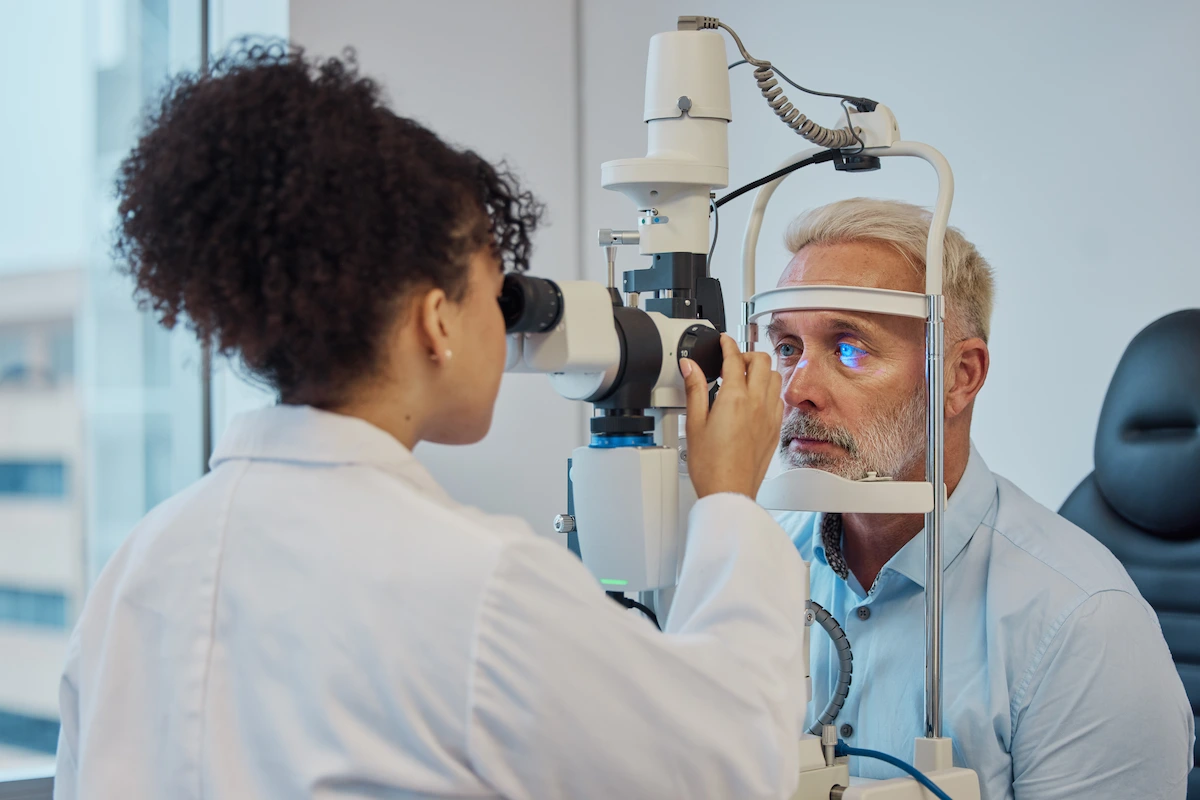
If you are over 40, routine eye care becomes less about simply seeing clearly and more about protecting long-term vision. A comprehensive eye exam in Elgin can detect age-related vision changes, early eye disease, and health-related concerns before they interfere with daily life. For adults who live or work near our Elgin eye doctor location, regular exams are an important part of staying healthy and independent.
What changes in your eyes after 40?
Many adults first notice vision changes in their 40s because the natural lens inside the eye becomes less flexible. This can make it harder to focus up close, especially when reading menus, working on a computer, or checking a phone.
Common changes after 40 can include:
- Needing brighter light to read comfortably
- Holding books or screens farther away
- Eye strain during computer work
- More frequent headaches
- Blurry near vision
- Trouble adjusting between near and distance vision
These changes are often normal, but they should still be evaluated. Updating your prescription, choosing the right lens design, or adjusting your screen habits can make everyday tasks more comfortable.
Why are routine eye exams important for adults over 40?
Routine eye exams are important after 40 because some eye conditions can develop gradually and without obvious symptoms at first. Regular exams matter for every age group, but adults over 40 have a few age-related reasons to be especially consistent.
During an exam, your eye doctor can check more than your glasses or contact lens prescription. They can also evaluate the health of your retina, optic nerve, cornea, tear film, and eye pressure. This helps screen for concerns such as glaucoma, cataracts, macular degeneration, and dry eye.
Early detection matters because many eye diseases are easier to monitor or manage when they are found before vision loss occurs.
What health conditions can affect your eyes?
Your eyes can show signs of whole-body health conditions, including diabetes and high blood pressure. This is one reason adults over 40 should not wait until their vision feels “bad enough” to schedule care.
People with diabetes often need a diabetic eye exam because diabetes-related eye disease can develop before noticeable vision changes. Even if your vision seems stable, changes in the blood vessels of the retina may need monitoring.
Adults over 40 may also be more likely to experience dry, irritated, or fluctuating vision. A dry eye evaluation can help identify whether symptoms are related to tear quality, inflammation, screen use, medications, or other contributing factors.
How often should adults over 40 schedule eye exams?
Many adults benefit from an eye exam every year, especially if they wear glasses or contacts, have diabetes, have a family history of eye disease, or notice new symptoms. Some people may need more frequent visits depending on their health, medications, risk factors, or exam findings.
You should also schedule an exam sooner if you notice:
- Sudden blurry vision
- New floaters or flashes
- Eye pain or redness
- Frequent headaches
- Trouble driving at night
- Persistent dryness or irritation
These symptoms do not always mean something serious is happening, but they are worth checking.
Protect your vision with regular eye exams
After 40, clear vision and healthy eyes are both worth protecting. Routine eye exams can help you keep your prescription current, catch eye disease earlier, and address symptoms before they disrupt work, driving, reading, or daily comfort. If it has been more than a year since your last exam, schedule an appointment in Elgin to stay ahead of changes in your vision.