
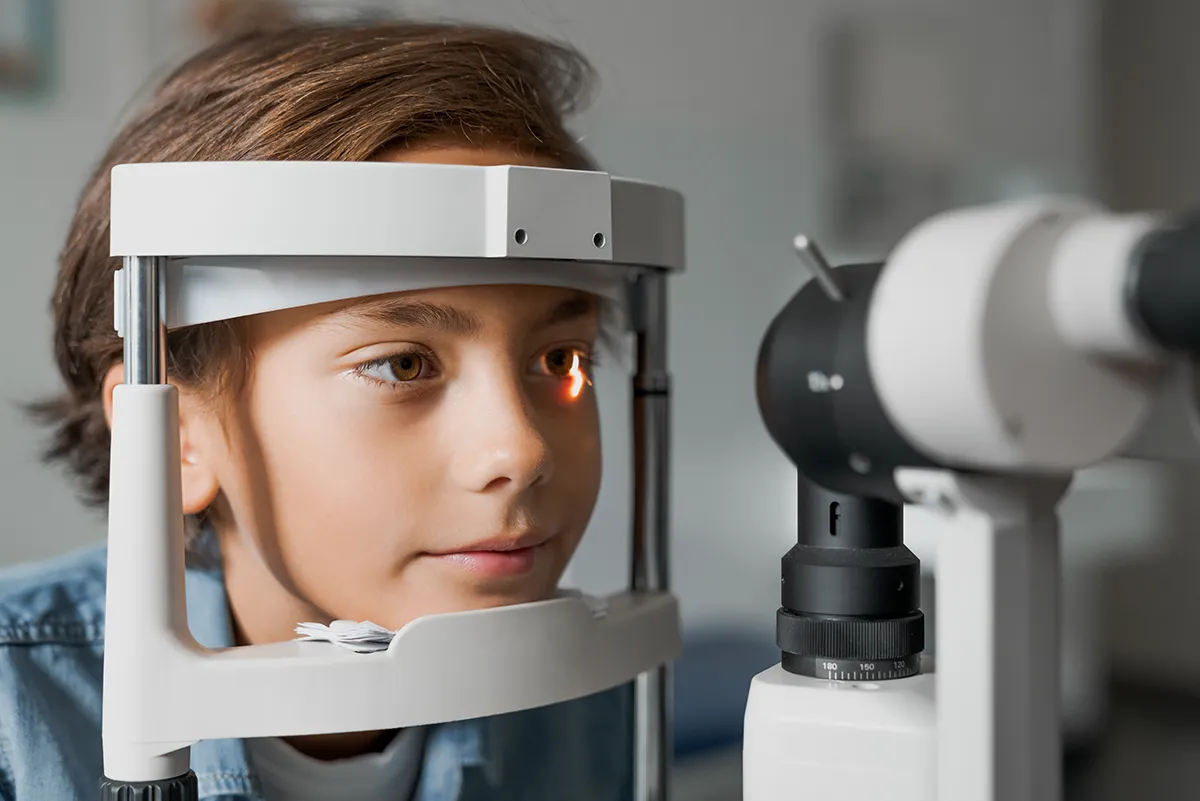
Children rely on clear vision for nearly every part of their day, from learning in the classroom to playing sports and developing coordination. At Quality Eye Care Clinic, our pediatric eye exams in Kildeer help identify vision problems early, often before a child recognizes that anything is wrong with their eyesight.
In this blog, we explain why early eye exams are important and what conditions pediatric eye doctors look for during these appointments.
Why early eye exams are critical for your child
Many children assume the way they see the world is normal, even when their vision is blurry. Additionally, routine school vision screenings can miss up to 75% of children with vision problems,¹ which means many issues go undetected without a comprehensive eye exam.
When left untreated, certain vision problems can also interfere with normal visual development and, in some cases, lead to conditions such as amblyopia (lazy eye).² This is when one eye does not develop clear vision as the brain favors the stronger eye.
Children benefit from early eye exams because they help:
- Detect vision problems before they affect learning
- Identify eye coordination or focusing issues
- Support healthy visual development during key growth years
- Establish a baseline for future eye health
At our Kildeer eye care center, we offer comprehensive pediatric eye exams for kids ages three and up. We evaluate both vision and eye health to support healthy visual development and clear eyesight at every stage.
Common vision problems in children
Children can experience a wide range of vision issues, many of which do not cause obvious symptoms right away.
Our eye doctors in Kildeer commonly look for:
- Nearsightedness (myopia)
- Farsightedness (hyperopia)
- Astigmatism
- Eye focusing or tracking problems
- Eye alignment concerns
Some children adapt by sitting closer to screens, squinting, or avoiding reading tasks altogether. These behaviors often develop gradually and can go unnoticed at home or school.
Signs your child may need an eye exam
Children don’t always complain about vision issues, but certain behaviors may still indicate a vision issue:
- Frequent squinting or eye rubbing
- Holding books or devices very close
- Complaints of headaches or tired eyes
- Difficulty focusing on reading tasks
- Losing place while reading
- Avoiding activities that require near work
If you notice these signs, your child’s optometrist can evaluate whether vision is contributing to the issue.
How often kids should have eye exams
Most children benefit from annual eye exams, especially during school years when vision can change quickly. Children with myopia or a family history of nearsightedness may need more frequent monitoring.
What happens during a pediatric eye exam
A child’s eye exam includes more than reading letters off a vision chart. Eye doctors evaluate how the eyes work together and how well they support learning and development.
A typical exam may include:
- Vision testing at distance and near
- Eye alignment and tracking assessment
- Focusing ability evaluation
- Eye health examination
- Prescription measurement for glasses or contact lenses, if needed
The exam also gives parents a chance to ask questions about school performance, screen use, or visual concerns.
Slowing myopia progression early on
After a pediatric eye exam, some children receive a diagnosis of myopia, also known as nearsightedness. Along with prescribing contact lenses or glasses for children, modern eye care includes treatment options designed to help manage how quickly myopia progresses. Slowing that progression can reduce the likelihood of higher prescriptions and support long-term eye health.
At our Kildeer office, we offer two proven myopia management options:
- Ortho-k (orthokeratology): Custom-designed contact lenses worn overnight that gently reshape the cornea while your child sleeps. This allows clear daytime vision without glasses or daytime contact lenses while also slowing how quickly myopia develops.
- MiSight® 1 day contact lenses: Soft, daily disposable lenses designed specifically for children with myopia. They correct vision and also help slow the progression of nearsightedness over time.
Both options require regular follow-up visits to monitor eye health, ensure proper fit, and track how well treatment is working.
Protecting your child’s vision as they grow
Children don’t always have the words to describe a vision problem—they simply adjust. That adjustment can sometimes look like frustration with reading, avoiding certain activities, or struggling to stay focused.
In Kildeer, Quality Eye Care Clinic provides thorough eye exams for children starting at age three. We also offer advanced myopia management options, including ortho-k and MiSight® 1 day contact lenses, to help protect vision during the years it changes most.
Schedule an appointment today to stay ahead of changes in your child’s vision.
References: