
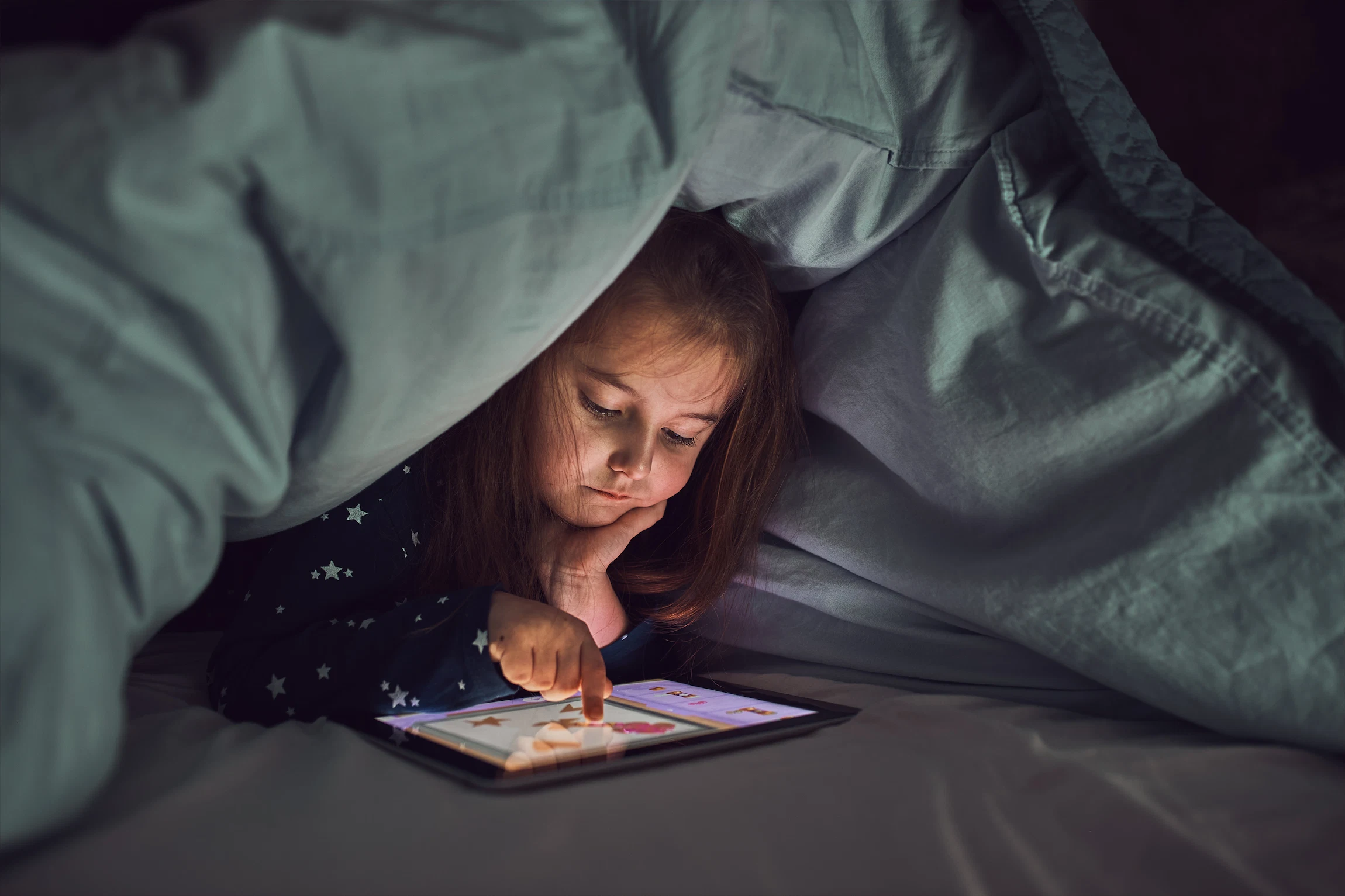
Screens are part of everyday life for many children. Homework, games, tablets, phones, and streaming all require close-up focus, often for long stretches at a time. Screen time does not cause myopia on its own, but frequent near work and limited time outdoors may contribute to myopia progression in children who are already at risk.
Myopia, or nearsightedness, makes distant objects appear blurry. It often begins during school-age years and can worsen as a child grows. Personalized myopia management helps families take a proactive approach to protecting their child’s vision.
How close-up activities can affect young eyes
Reading, drawing, and using digital devices all require near vision. These activities are not inherently harmful, but long, uninterrupted periods of close-up work can place extra visual demands on growing eyes.
Children may be more likely to experience eye strain when they hold screens too close, spend hours without breaks, or use devices in poor lighting. They may also blink less while concentrating on a screen, leading to tired, dry, or uncomfortable eyes.
If your child regularly squints at distant objects, sits close to the television, or moves devices unusually close to their face, these may be signs that myopia management could be helpful.
Outdoor time matters, too
Spending more time outdoors has been associated with a lower risk of myopia developing and progressing in children. Natural light and looking at objects farther away give young eyes a different visual environment than prolonged indoor near work.
Encourage your child to spend time outside each day when possible. Outdoor play, family walks, sports, and time at the park are all simple ways to build distance viewing and movement into their routine.
Practical screen habits for kids
Families do not need to eliminate screens completely. Instead, small changes can make close-up activities more comfortable and help create healthier visual habits.
Consider these tips:
- Encourage regular breaks from close-up work. The 20-20-20 rule is a helpful starting point: every 20 minutes, look at something 20 feet away for 20 seconds.
- Keep screens at a comfortable distance rather than directly in front of the face.
- Use adequate lighting when reading or completing homework.
- Balance indoor device use with outdoor activity.
- Watch for changes such as squinting, headaches, rubbing the eyes, or trouble seeing far away.
When glasses alone are not enough
Standard glasses correct blurry vision, but they do not slow myopia progression. If your child’s prescription is changing frequently, an eye doctor may recommend a myopia management option based on their age, prescription, eye health, and lifestyle.
For some children, orthokeratology may be an option. These custom lenses are worn overnight to gently reshape the cornea, allowing children to see clearly during the day without glasses or daytime contact lenses. Other options, including specialty soft contact lenses, may also be considered.
Help protect your child’s vision
Screen habits and outdoor time are important, but routine eye care is the best way to track changes in your child’s vision. Schedule an appointment in Kildeer or Elgin to discuss myopia management and create a plan that fits your child’s everyday life.